Generating Articles Swiftly Using GenAI

Project Overview:
Our team at Morgan Lewis was tasked with leveraging generative AI to improve attorney workflows. Our leads team uncovered an opportunity to address the LawFlash article writing process.
LawFlashes are articles written by Morgan Lewis attorneys and posted on the firm website, typically covering emerging legal trends or breaking developments. The problem? LawFlash writing is non-billable work and usually falls on junior associates, many of whom have little prior experience writing them.
Recognizing this inefficiency, we saw a chance to leverage AI to accelerate draft generation, reducing the burden on associates while maintaining quality. Our solution aimed to empower attorneys with a smarter, faster way to create polished LawFlashes.
Role: UX Designer/ Project Manager
Platform: Azure
Tools: Figma
The Process:
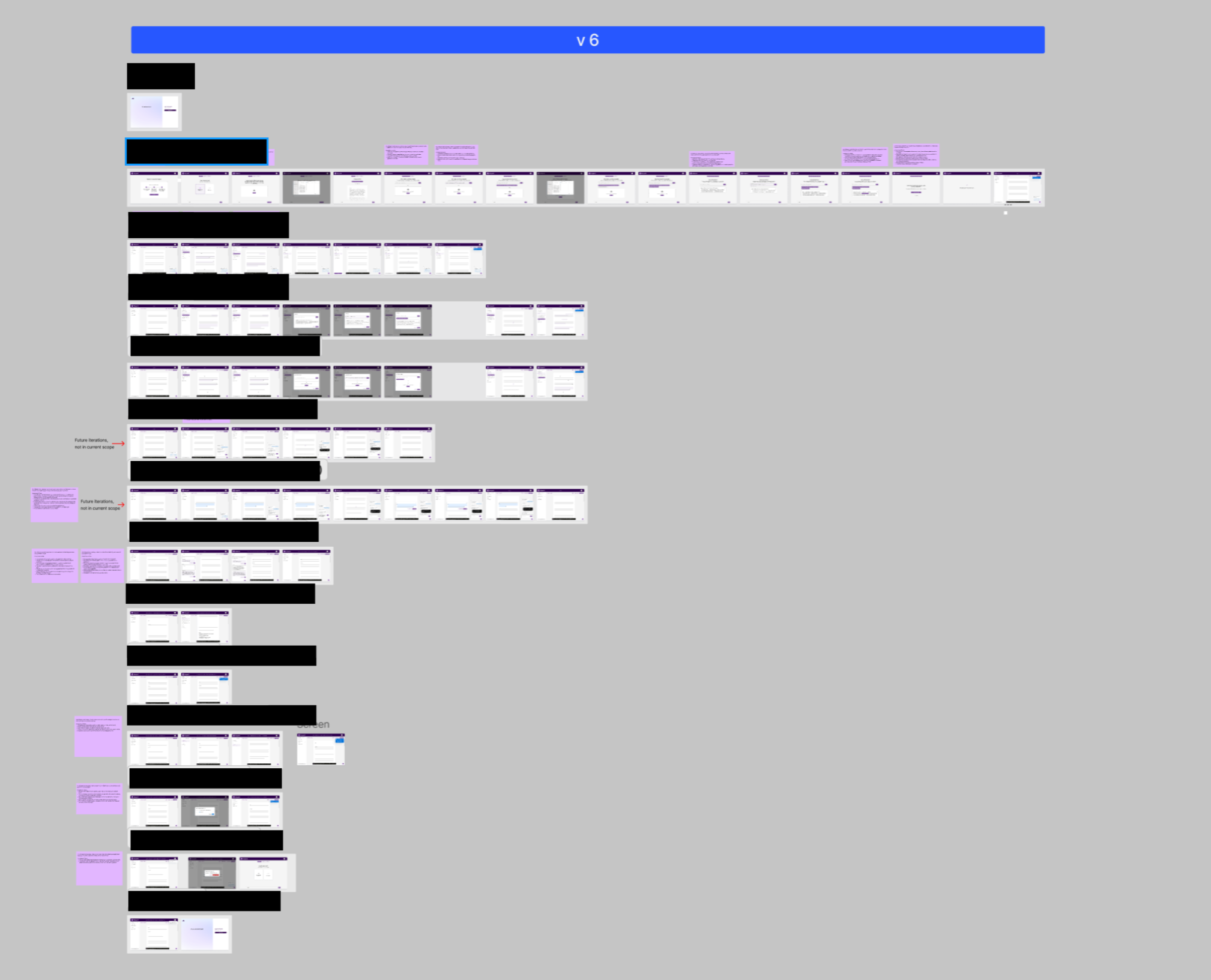
PROTOTYPES:
My first step was to map the end-to-end user journey and define key user stories to guide the product experience. Through in-depth discussions with attorneys and stakeholders, I identified pain points, workflows, and clear acceptance criteria to ensure the solution met user needs.
With these insights, I moved to wireframing and prototyping, translating user requirements into intuitive screens. Through iterative sprints—incorporating continuous testing and feedback—I refined the product experience and delivered a high-fidelity MVP ready for development.
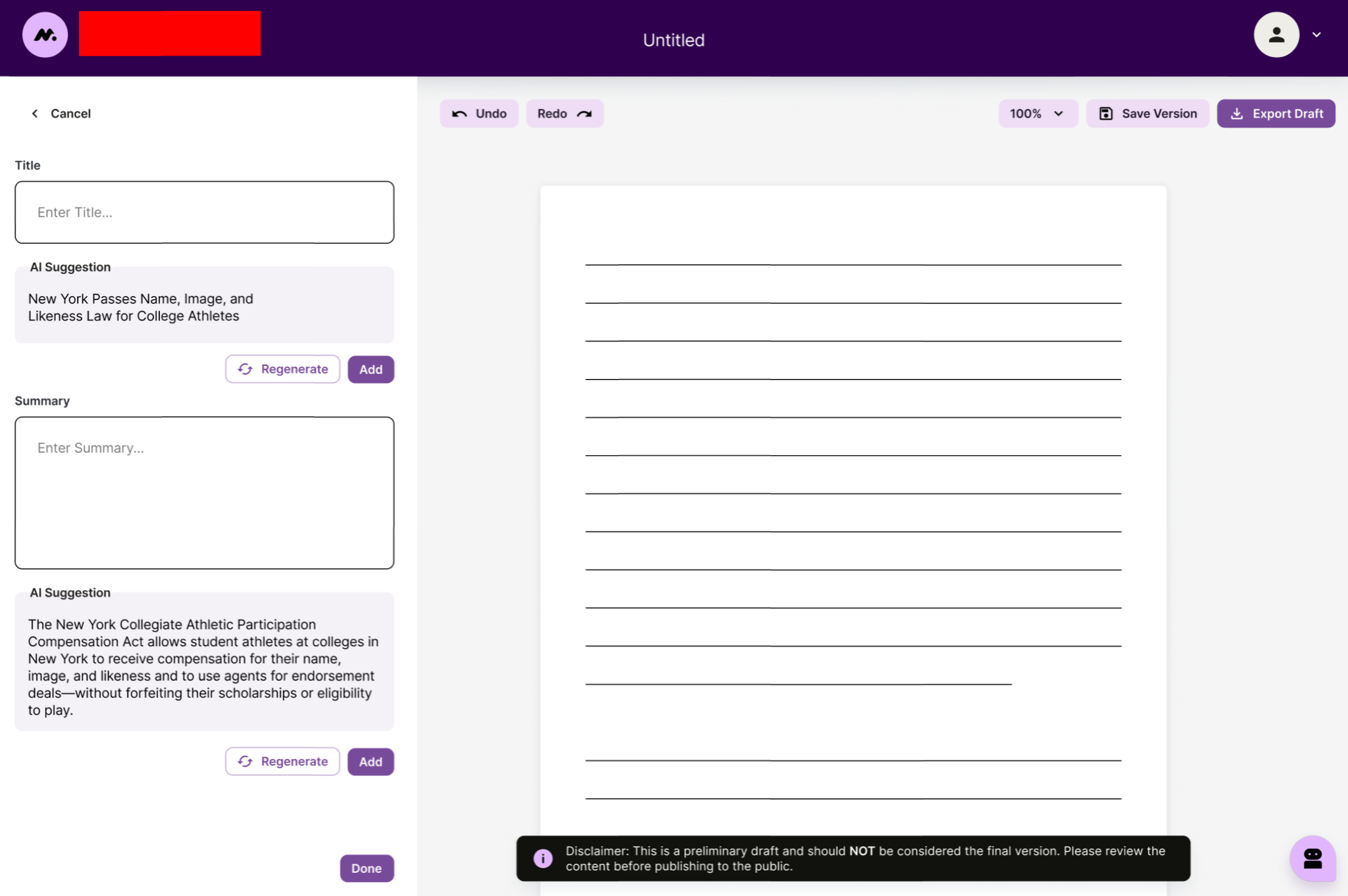
MOST VIABLE PRODUCT:
With prototypes, user stories, and acceptance criteria ready, the handoff process began. I worked closely with our development vendors to deliver an MVP product. Once the second sprint began, I orchestrated testing efforts—coordinating with stakeholders to share feature updates and testing guidelines, as well as gather their feedback. Simultaneously, I conducted rigorous QA checks in the production environment to ensure the build matched design specifications and incorporated stakeholder input.
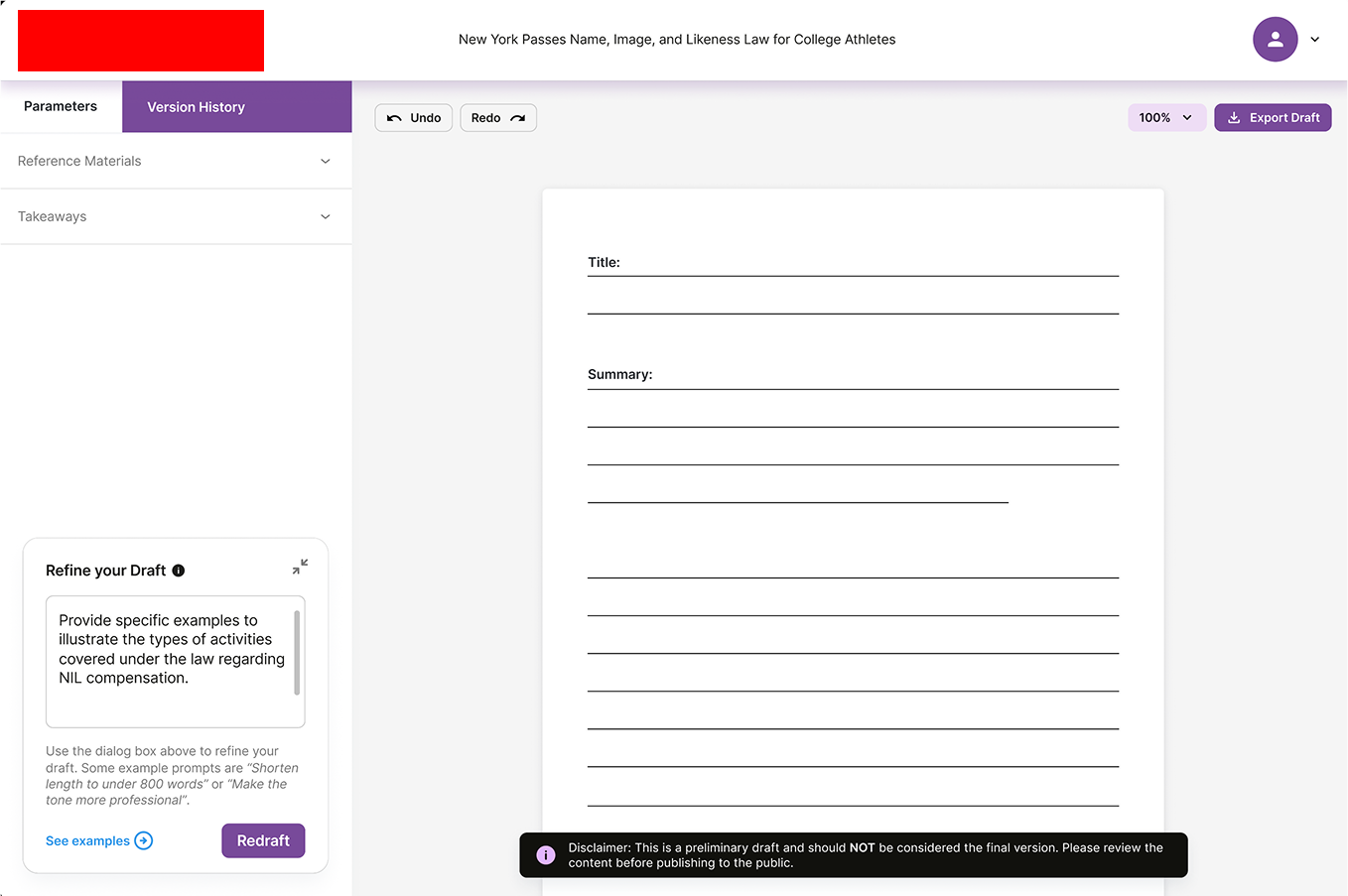
MOST MARKETABLE PRODUCT:
Following a successful MVP launch, I led the transition to our Minimum Marketable Product (MMP) phase. I revisited the product architecture, refining user flows based on stakeholder feedback and evolving requirements. To ensure consistency and scalability, I overhauled the prototype designs—aligning them with our design system standards while revamping the stylized components.
The Final Solution:
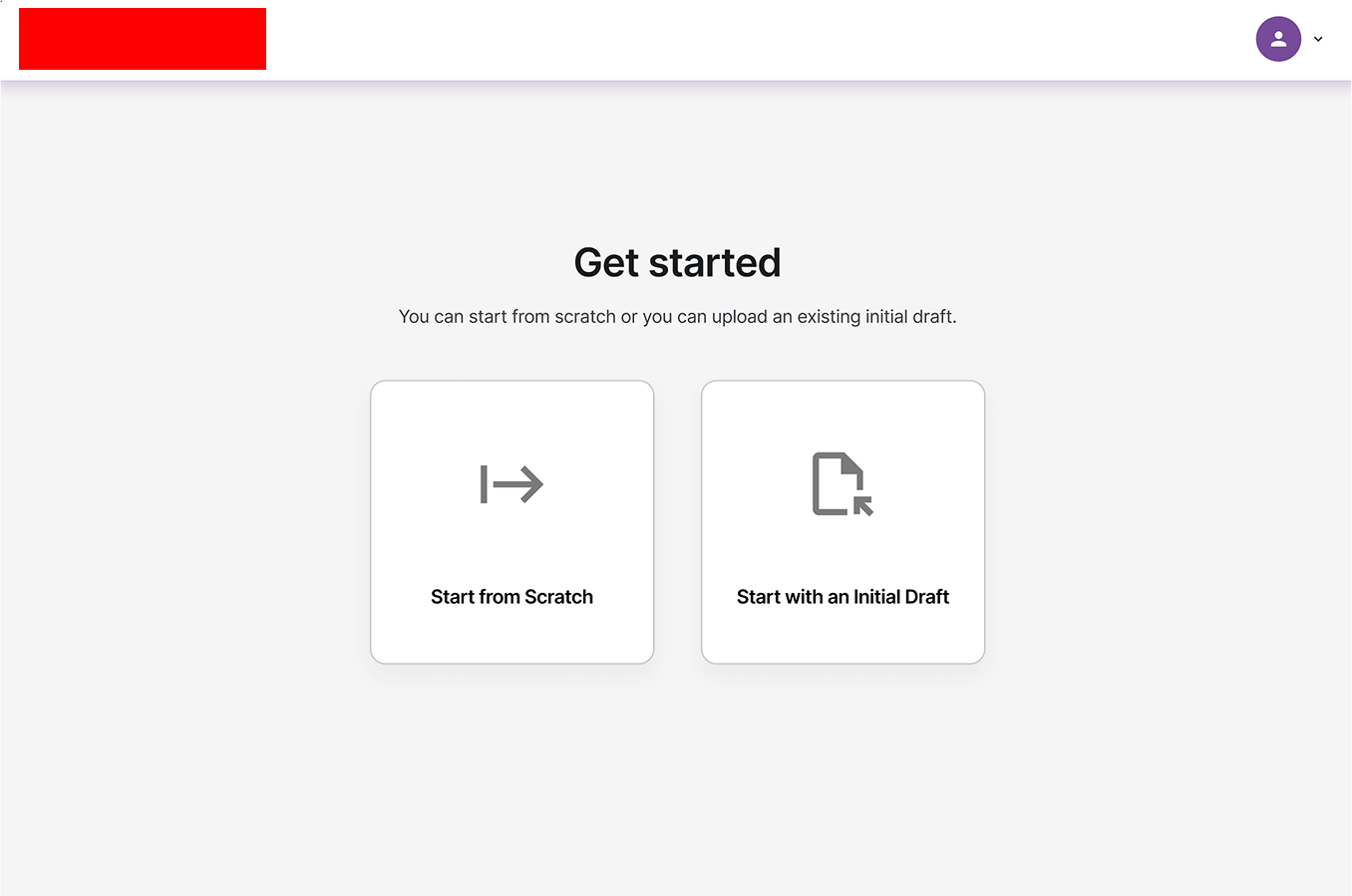
Over 18 months, our team evolved a concept into a transformative GenAI solution addressing a critical attorney pain point. The LawFlash application empowers attorneys by:
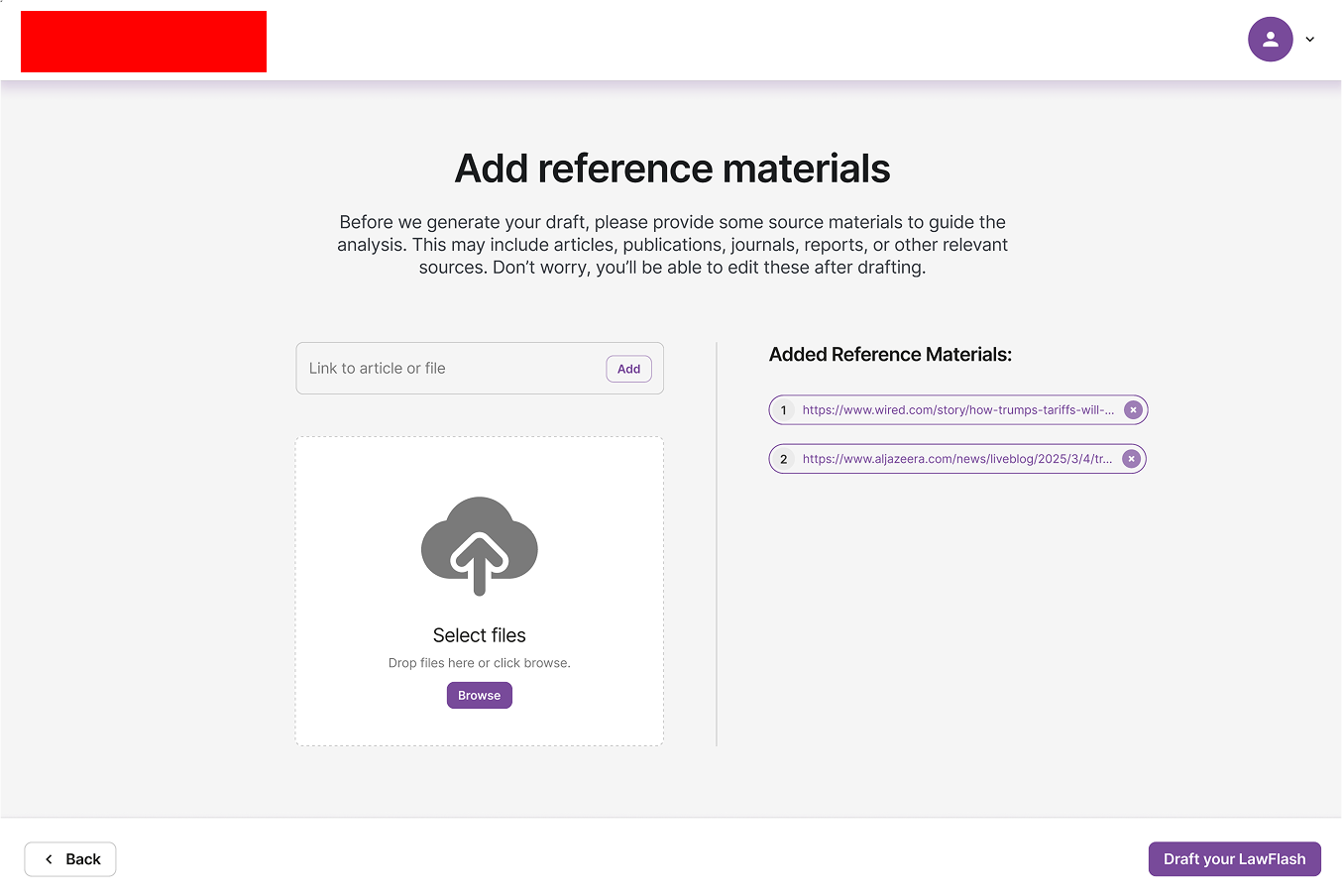
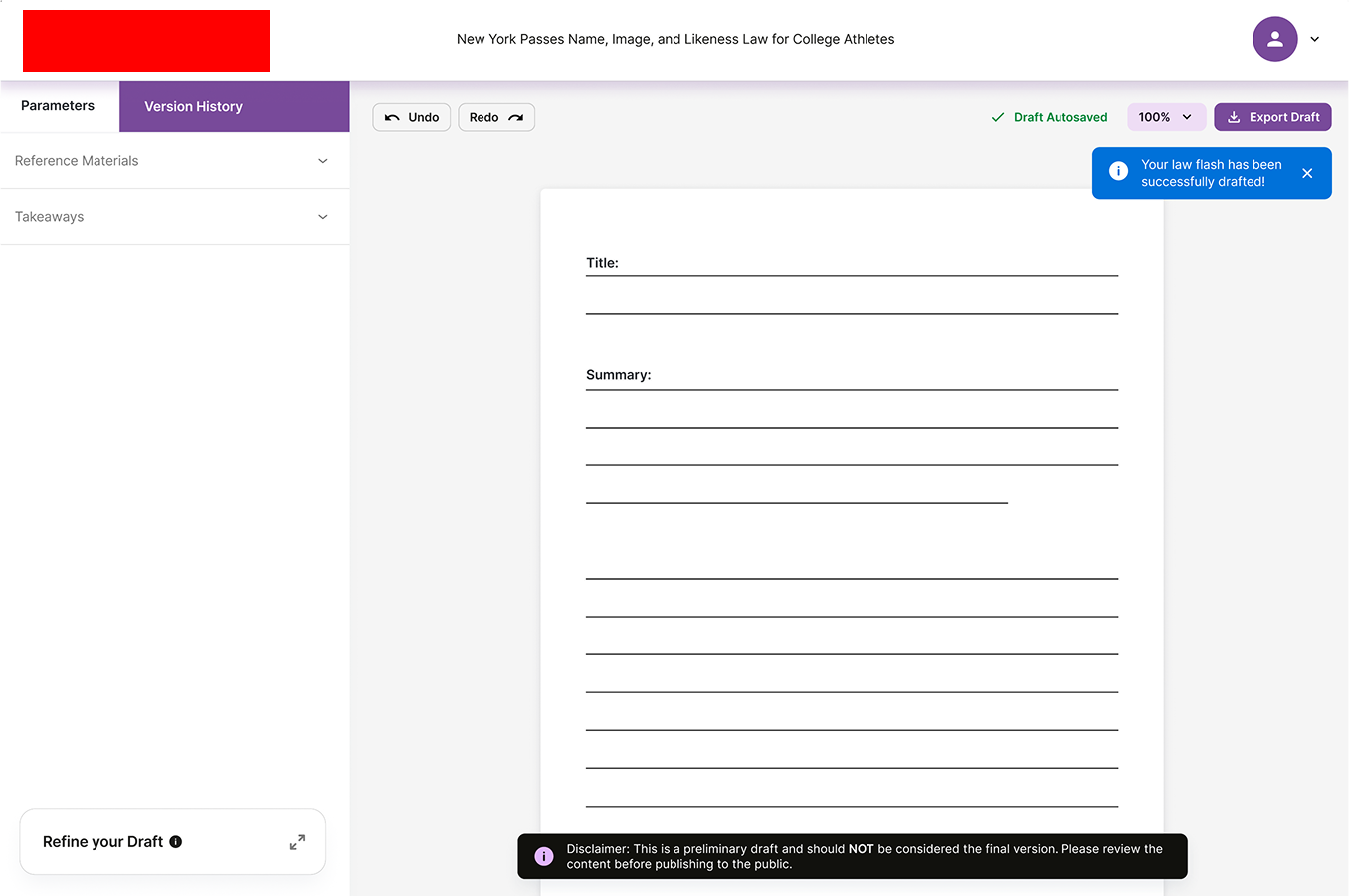
Automating Draft Generation - Users can instantly create a first draft LawFlash article by simply providing source materials.
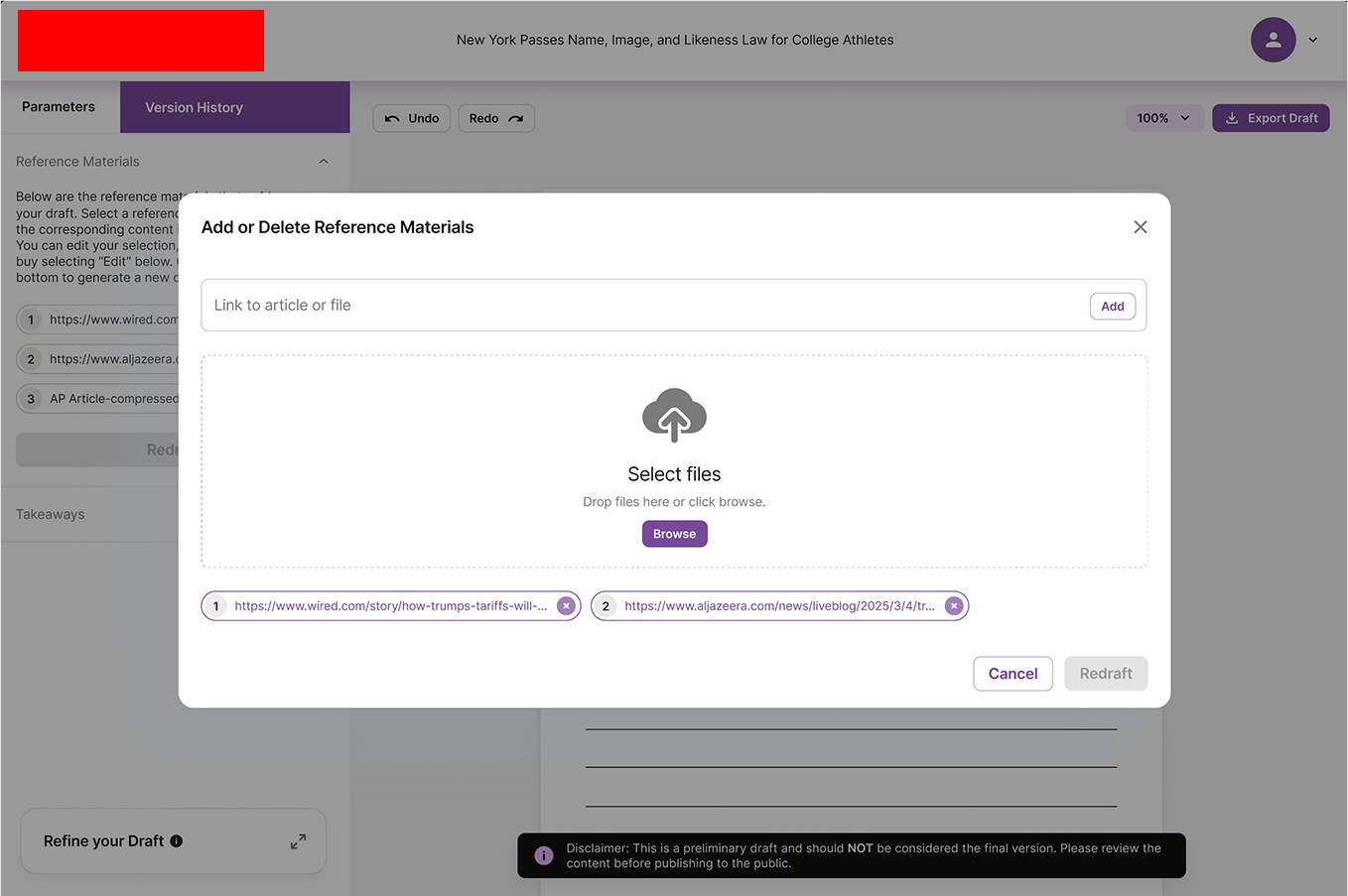
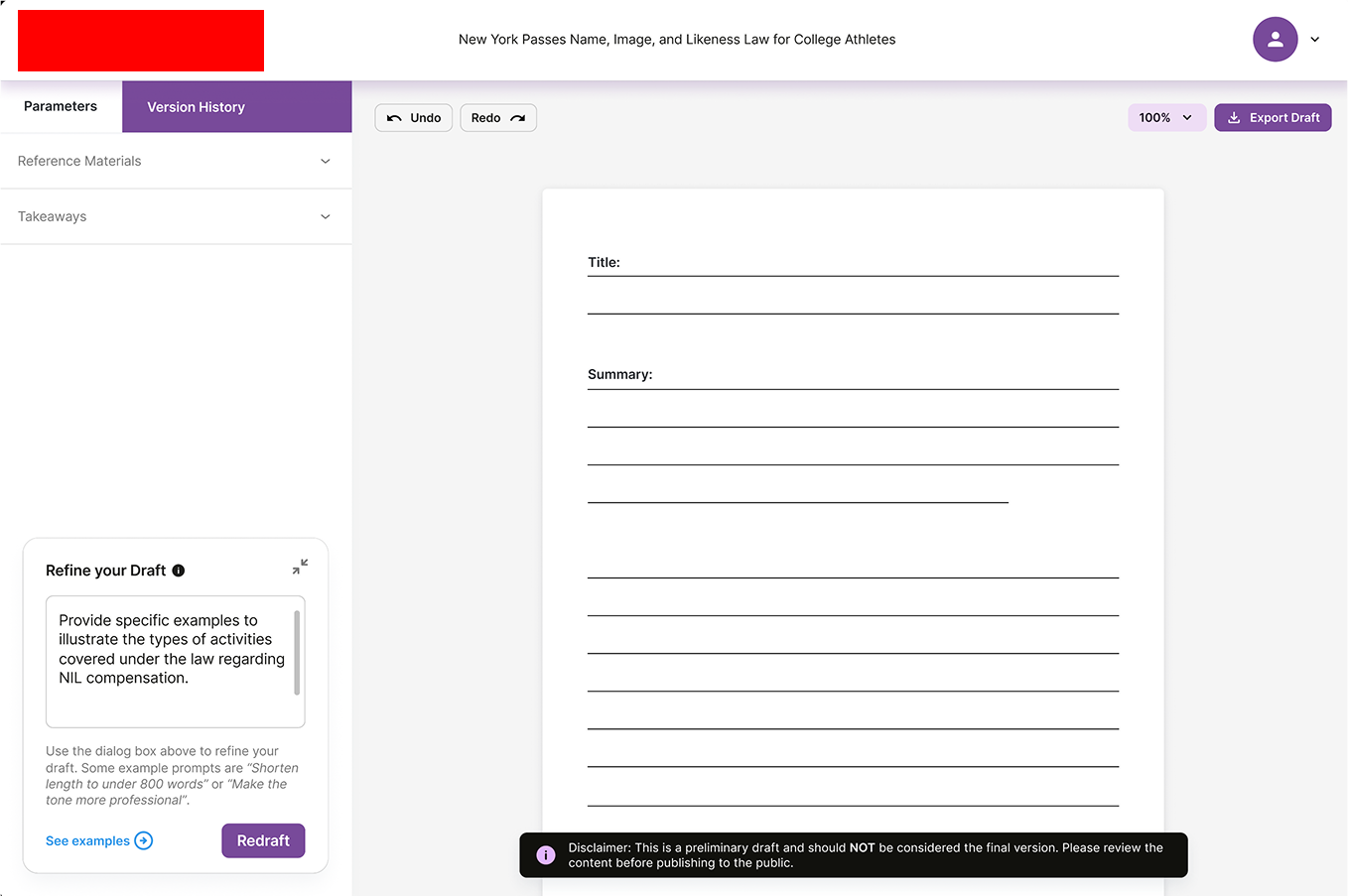
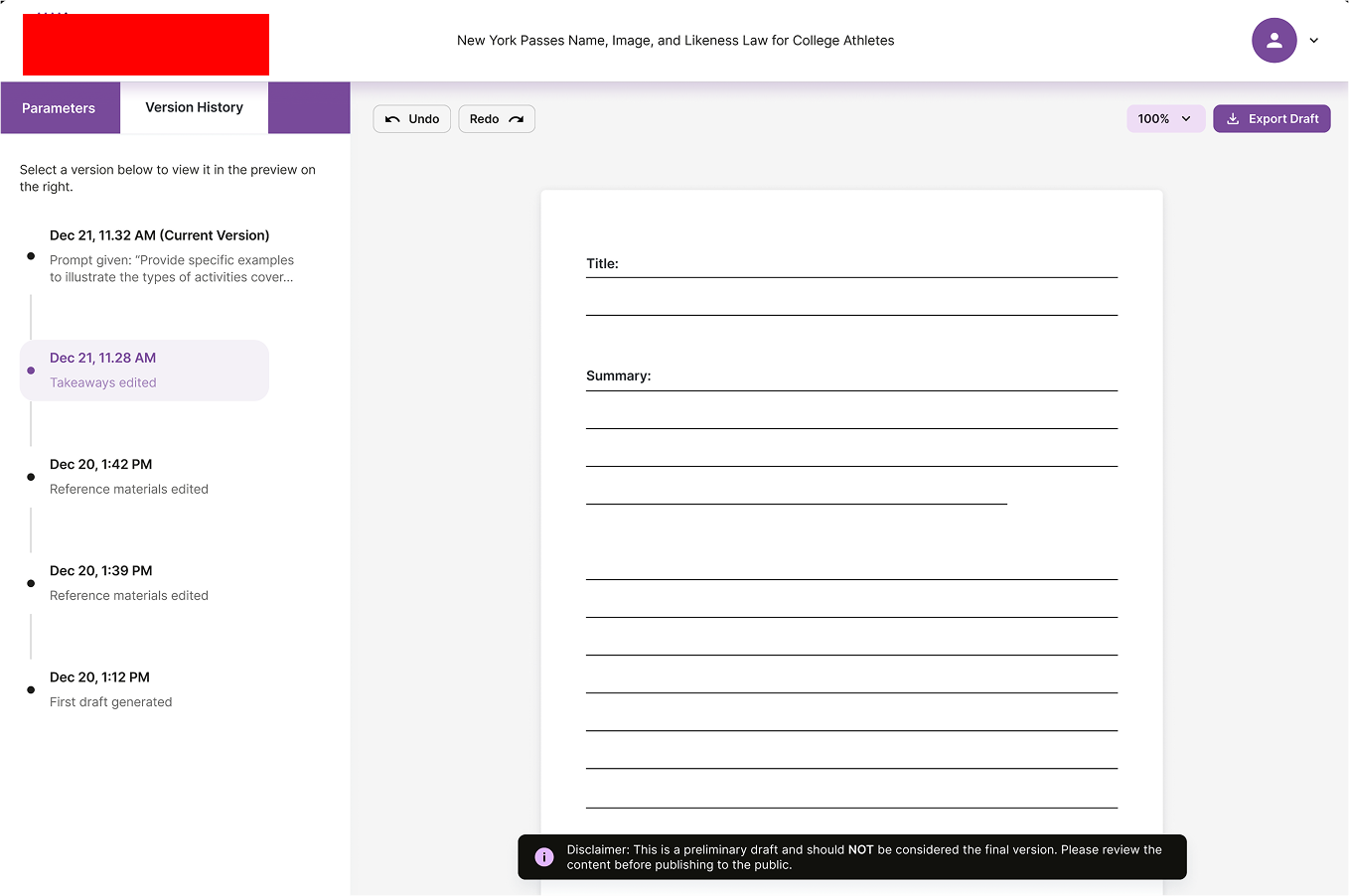
Enabling Precise Customization - Users can adjust linguistic parameters, as well as leverage a GenAI dialog box to further refine their draft.
Streamlining Final Output - Users can export their drafts to continue their draft refinement offline.
Now in active development, the application is scheduled for firm-wide deployment by summer 2025. The MMP phase represents a significant evolution from our initial concept, balancing innovative AI capabilities with attorney needs.
Takeaways:
Acceptance Criteria: Be as explicit as you can. Describe all the possible scenarios a user can encounter, and detail all the basic user interactions that need to be accounted for.
Staging: Prioritize building the features that drive the value of the product. As you start to acquire insights from user testing, prioritize the feedback that affect these value-driven features vs feedback that is more stylistic/visual.
GenAI Product Design: Artificial intelligence, as it stands, CANNOT automate an entire experience, but it CAN take users from 0% to 90% task completion. Try to design experiences that utilize AI for task-assistance vs task completion.